


Vendor Owned Inventory (VOI)
Strategic spare parts availability with the local customer warehouse
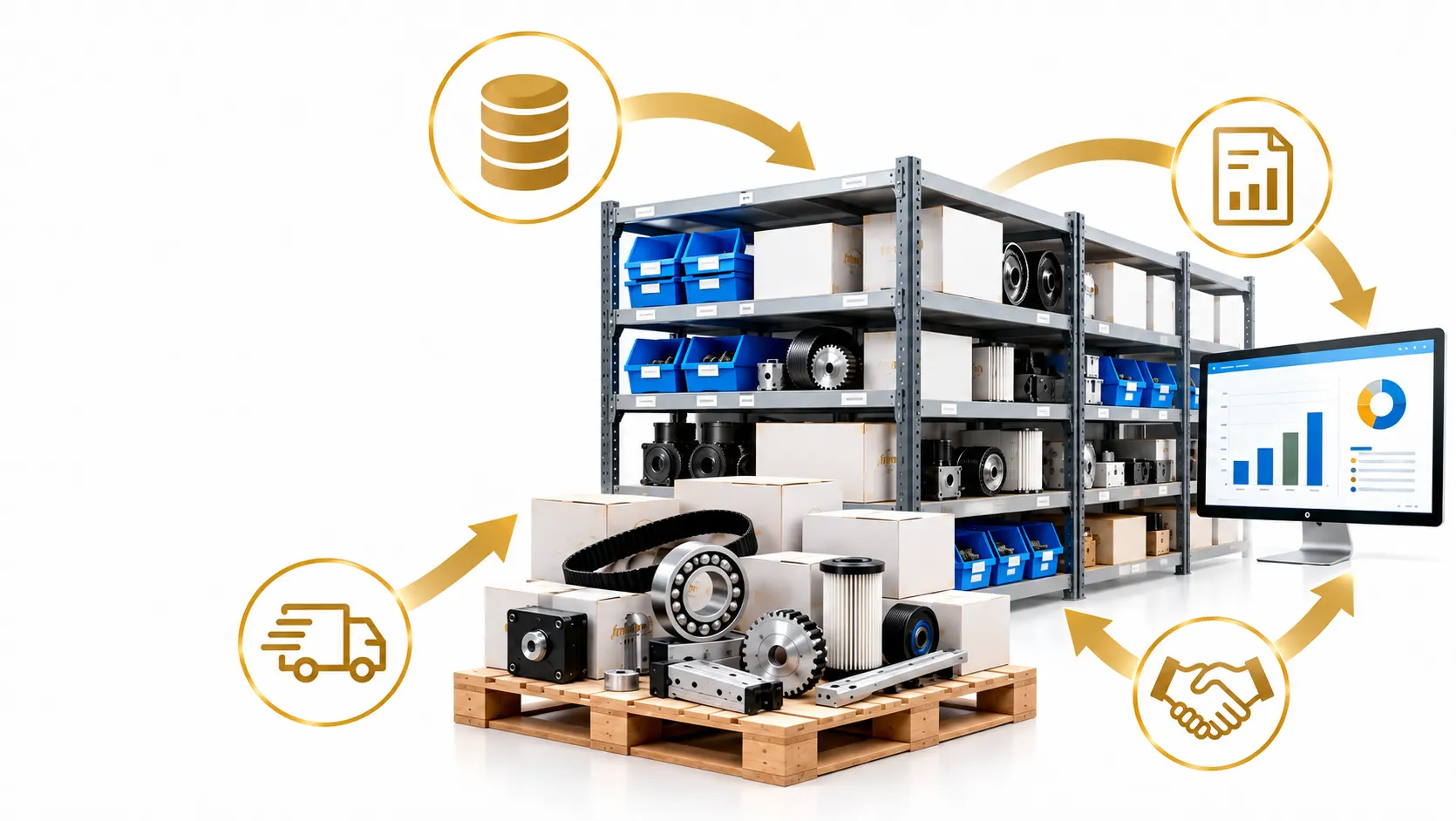
Vendor Owned Inventory (VOI) is a supply chain solution in which spare parts are stored at the customer’s location while remaining the property of the supplier until consumption. This model ensures immediate access to critical components without requiring upfront investment in inventory.
By maintaining agreed stock levels directly at the customer’s facility, VOI significantly improves parts availability and reduces the risk of production delays caused by missing components. Customers benefit from faster access to spare parts while optimizing working capital and inventory management processes.
The solution supports long-term cooperation between ITM Poland and the customer through continuous inventory monitoring, stock level optimization, and regular consumption reviews. Only actively used and strategically important items are retained within the VOI program, ensuring efficient inventory utilization.
VOI enables maintenance teams to plan service activities more effectively, reduce equipment downtime, and maintain production continuity through reliable access to critical spare parts when they are needed most.
- 24/7 availability of critical spare parts
- Reduced inventory investment and improved cash flow
- Payment only upon actual part consumption
- Consolidated monthly reporting
- Lower transportation and logistics costs
- Reduced risk of stock shortages and production delays
- Improved spare parts availability for maintenance activities
- Enhanced maintenance planning and scheduling
- Optimized inventory levels based on actual consumption
- Long-term partnership and collaboration between customer and supplier
- Increased equipment uptime and production continuity
- Simplified inventory management and replenishment processes
| Category | Description |
|---|---|
| Service type | Vendor Owned Inventory (VOI) |
| Primary objective | Ensure immediate spare parts availability while reducing inventory investment |
| Scope | Agreed spare parts stored at the customer's location |
| Ownership model | Inventory owned by ITM Poland until parts are consumed |
| Inventory selection | Jointly agreed list of rotating and critical spare parts |
| Replenishment approach | Stock replenishment based on consumption and agreed inventory levels |
| Billing method | Monthly, based on actual consumption reports |
| Customer involvement | Consumption reporting and inventory reviews |
| Main business impact | Improved parts availability and reduced working capital requirements |
| Key focus areas | Availability, cost optimization, inventory management, production continuity |
Explore complementary ITM services supporting supply chain optimization, production continuity, and operational efficiency.